The short answer
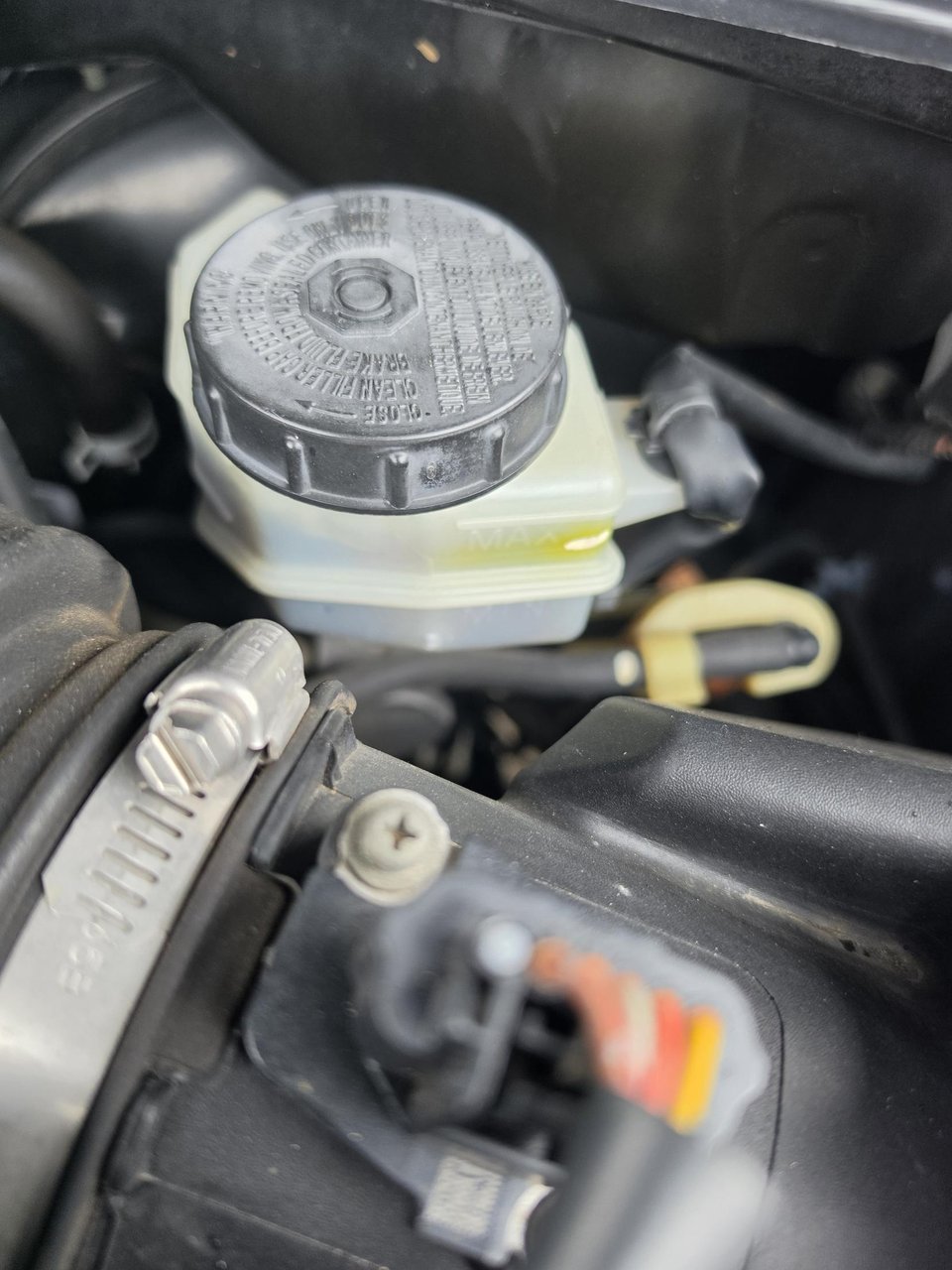
The master cylinder sits under the hood, usually right in front of the driver. When you press the pedal, it pushes brake fluid through the lines to each wheel. The booster behind it multiplies your foot's force so the pedal isn't hard to push.
A soft or sinking pedal, a pedal that goes nearly to the floor, or brakes that drag on their own are all reasons to stop driving and have it checked.
How it fails
- Internal seals wear. The pedal slowly sinks while you hold it, or feels low and spongy.
- Seals break down and turn the fluid black. Fresh brake fluid is clear to light amber. Black fluid in the reservoir often means seals are degrading inside.
- Ports inside get plugged. Debris from those seals can block the small port that lets pressure release when you let off the pedal. As the fluid warms up and expands, the brakes start applying on their own: the car drags, gets hot, and feels like the parking brake is on.
- External leaks. Fluid on the booster or running down the firewall.
Drive-by-wire brakes are different
On many newer vehicles, the pedal no longer pushes fluid directly. It's a sensor, and a module builds the pressure. Diagnosing those systems is different from a traditional master cylinder and booster: it takes a scan tool, the right tests, and often programming.
From our work: on 2019 and newer GM trucks and SUVs, the ABS module and brake master cylinder assembly goes out often, and a replacement needs specific programming before it works.
GM has issued recalls for brake control module software on some of these vehicles. Check your VIN on NHTSA's recall page before paying for a brake module repair, because a recall repair is free at a dealer.
How we diagnose it
- Check the fluid. Level, color and any sign of a leak.
- Feel the pedal. Engine off and running, held steady to see if it sinks.
- Scan the brake and ABS modules. On drive-by-wire systems, read the pressure and pedal sensor data.
- Check whether the brakes release. A wheel that stays tight or hot after the pedal comes up points to a plugged port or a stuck caliper.
- Check for recalls before quoting a module.
Cars have come a long way. Newer brake systems are tied to the car's computers for ABS, stability control and automatic braking. That helps safety, but it means a brake repair can now include satisfying the computer: calibrations, relearns and programming that the old find-the-leak jobs never needed.
Getting it fixed
- Find the cause first. The right part gets replaced, not a guess.
- Written estimate first. You see what failed before any work starts.
- Your choice of part. Options are ranked by quality and warranty term, from the best aftermarket and OEM parts.
- Where: where the car is parked, in Lake Norman, Mooresville, Denver, Lincolnton and Statesville. Like every repair we list, not every car can be done in a driveway. If we quoted your repair and can't reach the part when we arrive, you don't pay for the repair.
Get a quote for master cylinder repair
Updated November 28, 2026.