The short answer
Tie rods connect the steering rack or gearbox to each front wheel. When they wear, the steering gets loose and the tires wear unevenly. If one breaks, you lose steering on that wheel. On trucks with a steering gearbox, idler and pitman arms do a similar job.
Signs they're worn
- Loose or vague steering, extra play at the steering wheel.
- Wandering at highway speed.
- Clunking over bumps or when turning.
- Tires worn on the inside or outside edge.
When to replace them
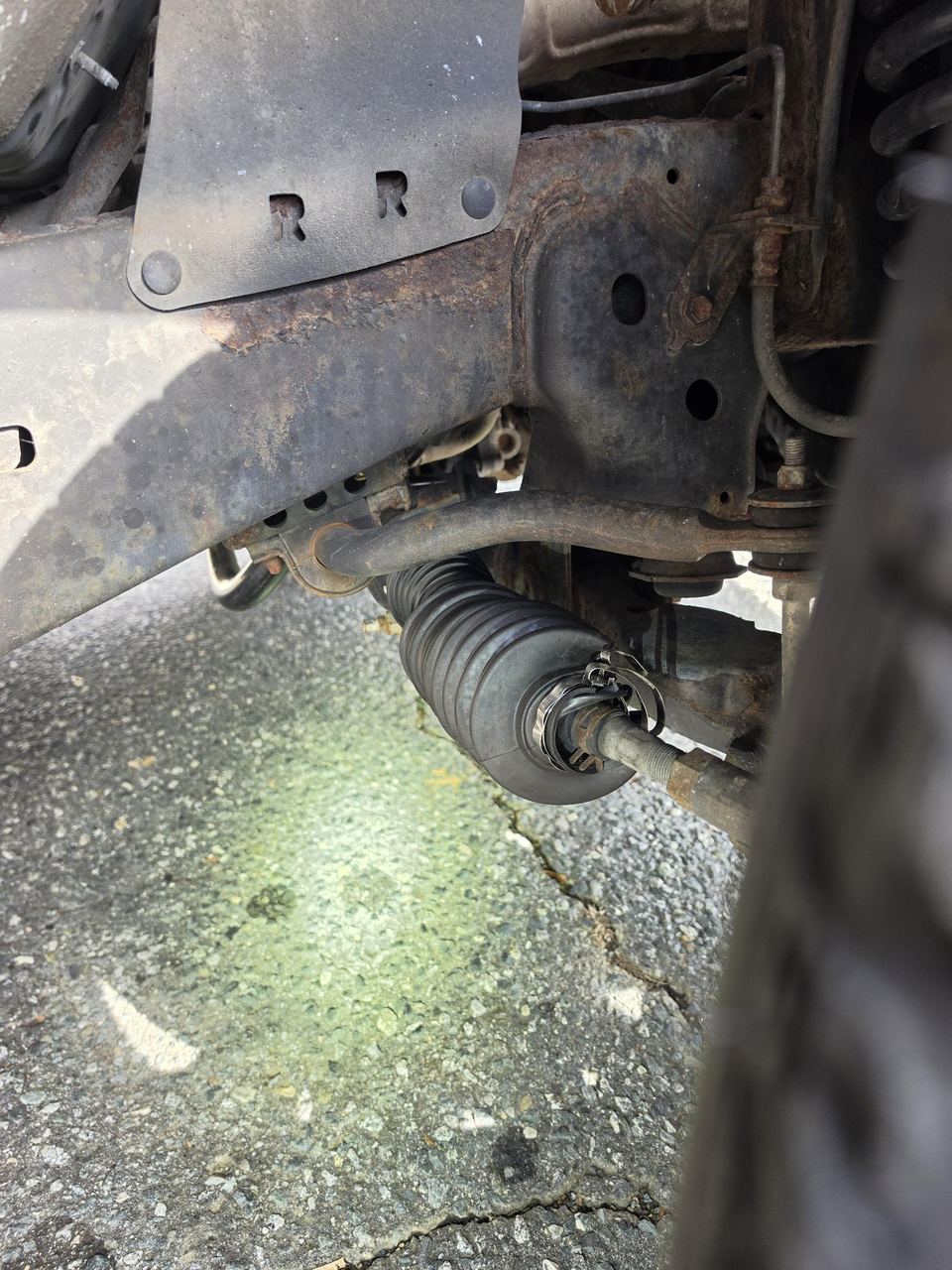
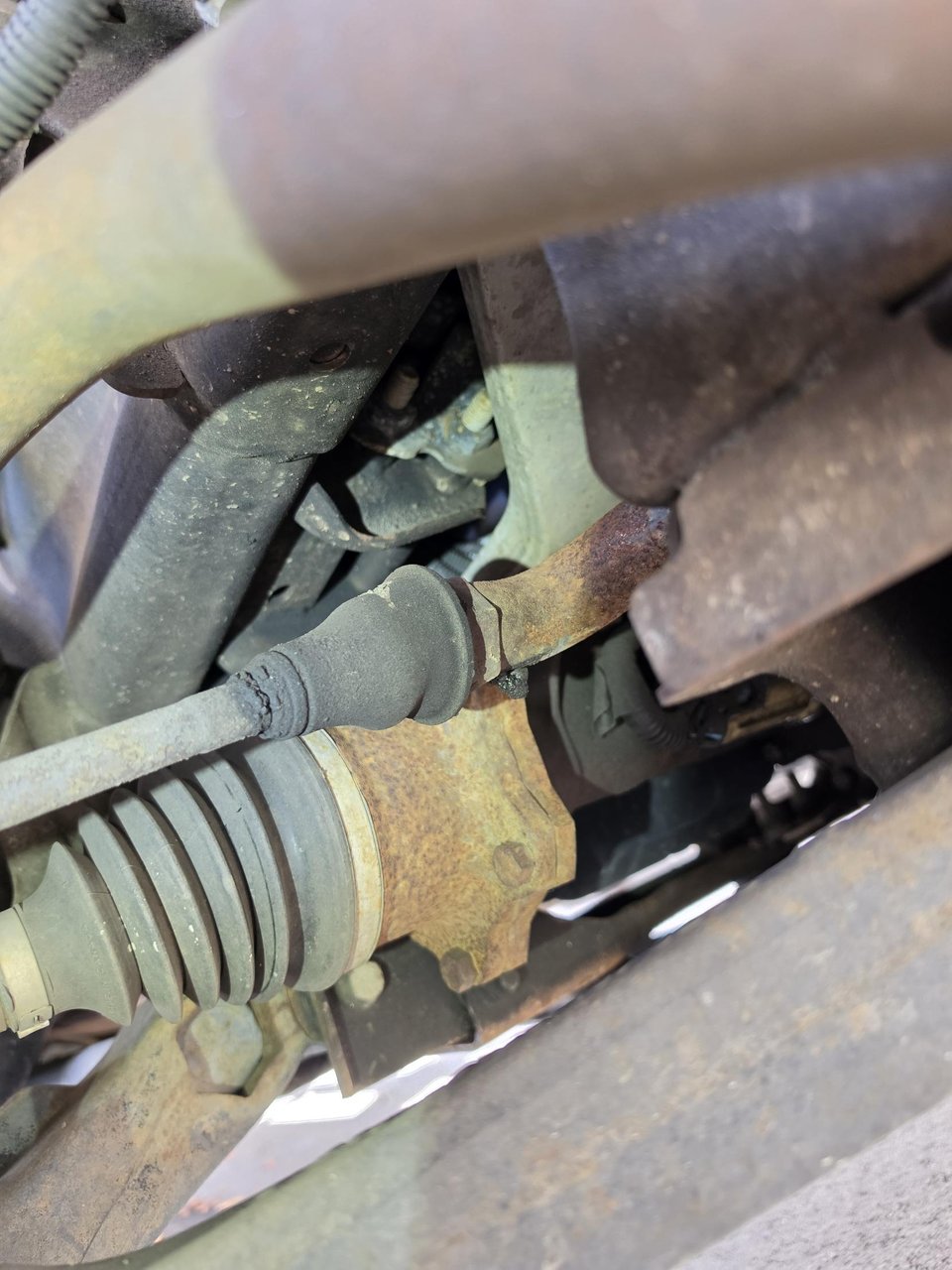
Grease seeping past the boots is normal on an older truck. Replace them when they're noisy or the seals have deteriorated. That is not a push sale like other shops and inspectors.
If they're quiet, we point them out and recommend doing them when you plan other steering or suspension repairs. The labor crosses over: two birds, one stone. It saves time, and it avoids redoing a job and damaging the earlier patchwork repair.
If they look like this and make noise, they move up the list. An inner tie rod should be done with the outer, in pairs, along with the sway bar end links and anything else that has to come off anyway.
We don't patchwork or nickel and dime future repairs. Let's find them all at once, and do them all at once if budget allows.
What the job includes
Alignment. Replacing tie rods, control arms, struts and some other steering and suspension parts changes the alignment. An alignment needs a shop's alignment rack. We'll tell you when your repair needs one.
Things you can do at home
- Write down when it happens: speed, turning left or right, braking, accelerating, bumps, cold mornings.
- Check whether it follows road speed or engine speed. Coasting in neutral at a safe moment, a noise that stays is wheels, tires or driveline. One that drops away follows the engine.
- Record it on your phone. Even a short clip helps.
- Look at your tires for uneven wear, bulges or a nail.
- Check the lug nuts are all there and tight, especially after recent tire work.
Getting it fixed
- Find the cause first. The right part gets replaced, not a guess.
- Written estimate first. You see what's worn before any work starts.
- Your choice of part. Options are ranked by quality and warranty term, from the best aftermarket and OEM parts.
- Where: where the car is parked, in Lake Norman, Mooresville, Denver, Lincolnton and Statesville. Like every repair we list, not every car can be done in a driveway. If we quoted your repair and can't reach the part when we arrive, you don't pay for the repair.
Get a quote for a tie rod replacement
Updated November 28, 2026.