The short answer
Coolant is usually green, orange, pink, blue or yellow, thin like water, and smells sweet. If you see that under the front of the car, smell something sweet, or keep adding coolant to the reservoir, the cooling system is leaking. Left alone, it ends in overheating.
Where coolant leaks come from
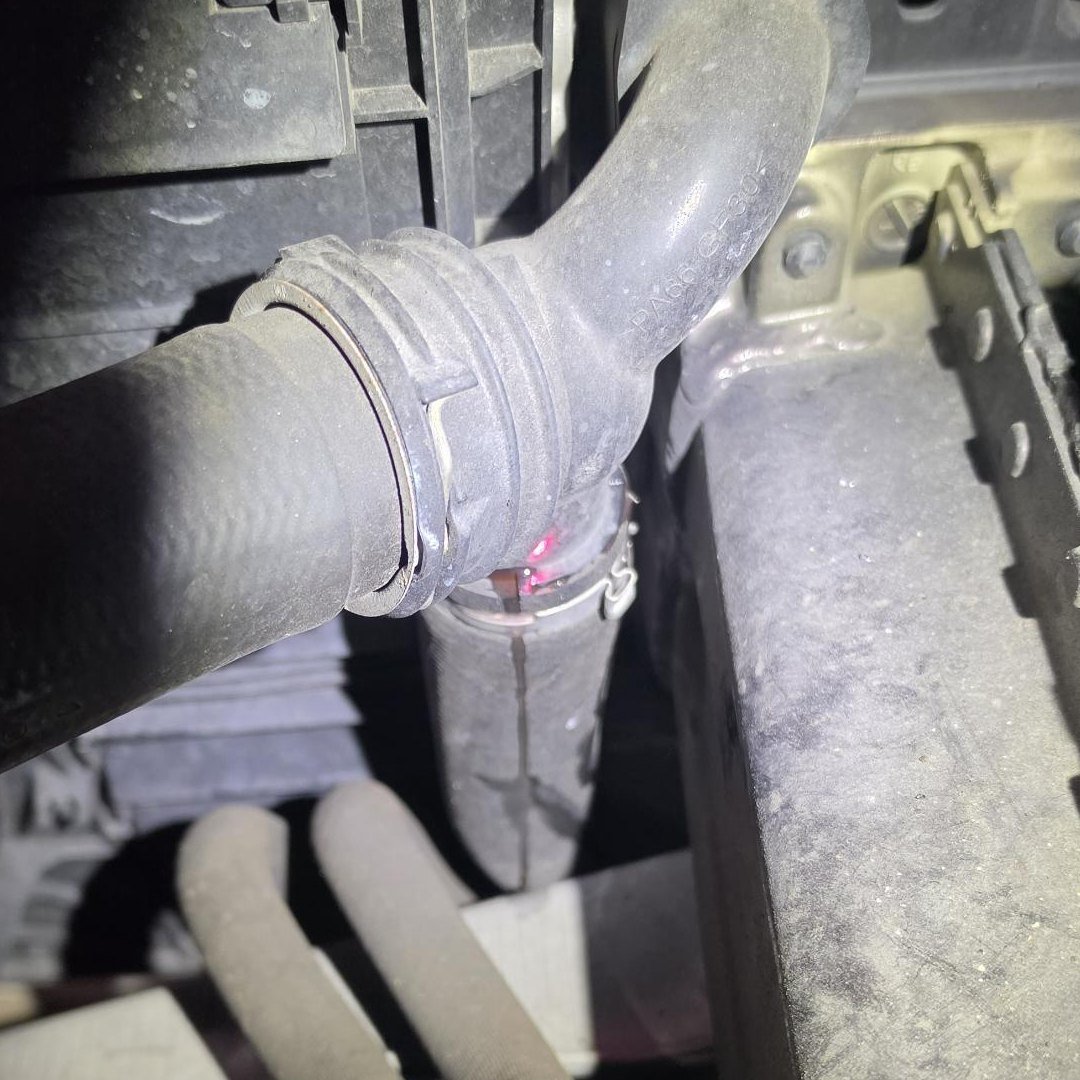
- Hoses and clamps
- What to look for: Wet or crusty spots at the ends, soft or swollen hoses.
- Radiator
- What to look for: Drips from the bottom or the plastic tanks on the sides, often from cracked seams.
- Water pump
- What to look for: A drip from a small weep hole near the pump, or a trail down the front of the engine.
- Thermostat housing
- What to look for: Many are plastic and crack with age.
- Reservoir or cap
- What to look for: A cracked tank, or a cap that no longer holds pressure.
- Heater core
- What to look for: A sweet smell inside, a greasy film fogging the windshield, or a damp passenger floor.
- Head gasket
- What to look for: Coolant goes missing with nothing on the ground. White, sweet-smelling exhaust.
Things you can check at home
Never open the radiator cap or coolant reservoir on a hot engine. The system is under pressure and the coolant can be well above boiling. Wait until the engine is cool to the touch.
- Check the coolant level, engine cold. The reservoir has COLD or MIN and MAX marks. Low coolant means it's going somewhere.
- Look at the color. Coolant comes in green, orange, pink, blue or yellow depending on the car. Brown, rusty or oily coolant is a warning sign. Don't mix types; top off with what your owner's manual calls for.
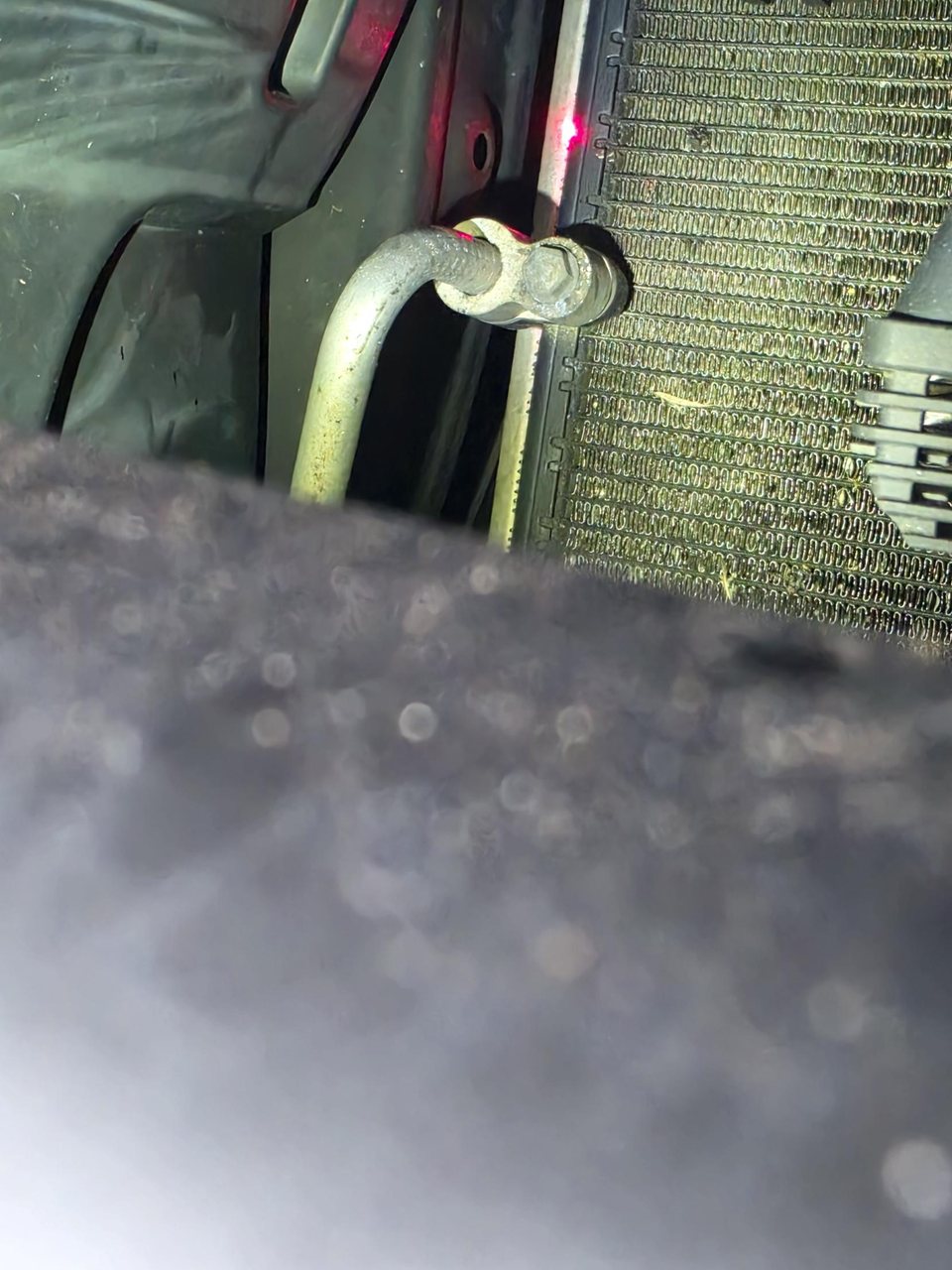
- Look and smell for leaks. A sweet smell, a crusty white, green or pink residue around hoses and the radiator, or drips under the front of the car after it sits.
- Check the belt. With the engine off, look for cracks, shiny glazed ribs or missing chunks.
- Watch the fans. With the engine warm and idling and the AC on, the electric cooling fans behind the radiator should run.
Coolant is poisonous and tastes sweet to pets and children. Wipe up spills and keep the jug capped.
How it gets found
Some leaks only show when the system is hot and under pressure. We pressure test the cooling system, and use UV dye when a leak is slow or hidden. Then you get a written estimate that names the part.
Getting it fixed
- Find the cause first. The right part gets replaced, not a guess.
- Written estimate first. You see what's leaking before any work starts.
- Your choice of part. Options are ranked by quality and warranty term, from the best aftermarket and OEM parts.
- Where: where the car is parked, in Lake Norman, Mooresville, Denver, Lincolnton and Statesville. Like every repair we list, not every car can be done in a driveway. If we quoted your repair and can't reach the part when we arrive, you don't pay for the repair.
Get a quote for a coolant leak diagnosis
Updated November 28, 2026.