The short answer
The check engine light means the car's computer found a fault and stored a code that names the test that failed. The light alone doesn't say whether the problem is small or serious. How it behaves does.
- Steady light, car drives normally. Not an emergency. Have it diagnosed soon, because the light can't warn you about a second problem while it's on.
- Flashing light. The engine is misfiring badly enough to overheat and damage the catalytic converter. Ease off, avoid hard acceleration, and stop driving as soon as you safely can.
- Light plus another warning. A temperature gauge in the red, an oil pressure light, or an engine that shakes or loses power means pull over and shut it off.
What usually causes it
Hundreds of codes can turn the light on. These are common ones, roughly from simple to involved:
- Loose gas cap or EVAP leak
- What it is: The fuel vapor system isn't sealed.
- What you may notice: Often nothing. Sometimes a fuel smell or a "check fuel cap" message.
- Spark plugs or ignition coils
- What it is: One or more cylinders aren't firing right.
- What you may notice: Rough idle, shaking, hesitation. A flashing light if it's bad.
- Oxygen sensor
- What it is: A sensor that reads the exhaust has gone slow or failed.
- What you may notice: Usually nothing at first. Fuel mileage can drop.
- Vacuum or intake leak
- What it is: Air the computer isn't measuring is getting into the engine.
- What you may notice: High or rough idle, sometimes a hissing sound.
- Mass airflow sensor
- What it is: The sensor that measures incoming air is dirty or failing.
- What you may notice: Hesitation, stalling, poor mileage.
- Thermostat
- What it is: The engine isn't reaching full temperature.
- What you may notice: Heater slow to warm up, temperature gauge reading low.
- Catalytic converter
- What it is: The converter isn't cleaning the exhaust the way it should.
- What you may notice: Often nothing. Sometimes a rotten-egg smell or low power.
The same code can come from more than one of these. A catalytic converter code, for example, can be set by a bad oxygen sensor or by an exhaust leak ahead of it.
What you can check yourself
- Tighten the gas cap. Until it clicks. If that was it, the light goes out on its own after several days of normal driving.
- Watch the gauges. Temperature in the normal range, no oil light, no battery light.
- Notice how it drives. Shaking, stumbling, low power or new noises move this from "soon" to "now".
- Think about what changed. A fill-up just before the light points toward the gas cap or the EVAP system. Rain, a car wash or recent work under the hood points toward a connector or a hose left loose.
Don't clear the code or disconnect the battery to make the light go away. Cars store history codes, pending codes and symptom bytes that most code readers never show. Our scan tools do. They're footprints in the mud. Don't be the rain that washes them away.
A code is not a diagnosis
A free code read at a parts store gives you a code. The code names the test that failed. It does not name the part that failed, and replacing the part on the printout is a common way people pay twice.
A diagnosis goes further:
- Read every module and the stored data. All the codes, and the snapshot of engine conditions saved when each one set.
- Test the system the code points to. Live sensor readings, a smoke test for leaks, or a check of the wiring and the part itself.
- Confirm the cause before quoting. You get a written estimate that names what failed and what it costs to fix.
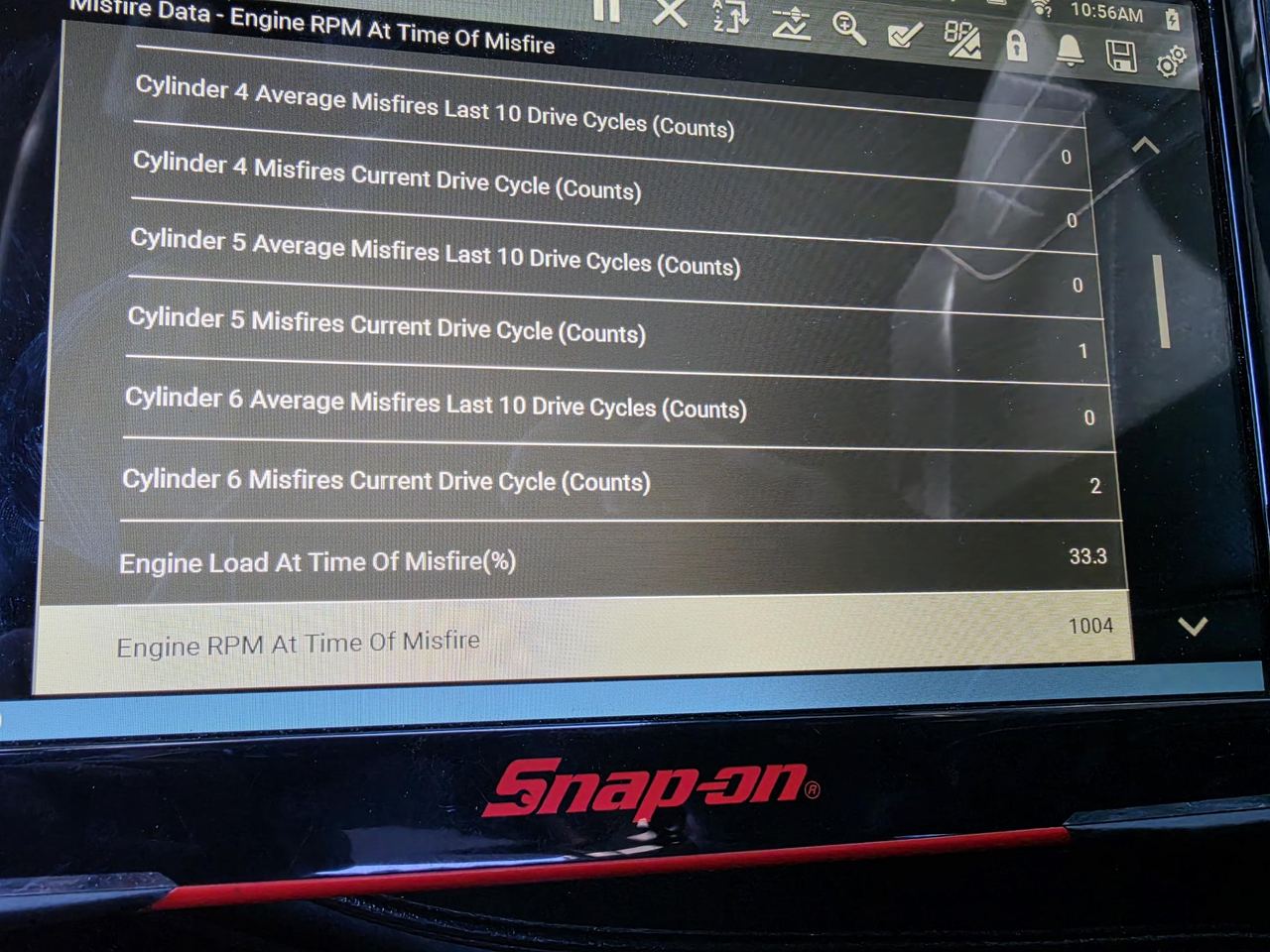
Check engine light and North Carolina inspection
As this was written in November 2026, 19 North Carolina counties require an emissions inspection along with the yearly safety inspection, including Mecklenburg, Lincoln, Gaston, Iredell, Cabarrus, Rowan and Union. A lit check engine light fails it. Clearing the code just before the inspection doesn't help, because the inspection also checks whether the car's self-tests have run.
State laws passed in 2023 and 2026 end the emissions inspection in all 19 counties once the EPA gives final approval, which was still pending when this was written. The yearly safety inspection stays.
What drives the cost
- Diagnostic time. Most diagnoses are billed by the time it takes to find and prove the cause.
- The kind of fault. A steady fault is quicker to find than one that comes and goes.
- What it turns out to be. A loose gas cap costs nothing to fix. A converter costs a lot. That's why testing comes before parts.
That's why we don't post one price for every car. See how our estimates work. Our rates are on our Rates page, and every repair gets a written estimate before work starts.
Getting it fixed
- Find the cause first. The right part gets replaced, not a guess.
- Written estimate first. You see what failed before any work starts.
- Your choice of part. Options are ranked by quality and warranty term, from the best aftermarket and OEM parts.
- Where: where the car is parked, in Lake Norman, Mooresville, Denver, Lincolnton and Statesville. Like every repair we list, not every car can be done in a driveway. If we quoted your repair and can't reach the part when we arrive, you don't pay for the repair.
Get a quote for a check engine light diagnosis
Updated November 28, 2026.