The short answer
A lasting gasoline smell is never normal. It means fuel or fuel vapor is getting out of a system that is supposed to be sealed. Some causes are as small as a loose gas cap. Others are a fire risk.
Stop driving and park outside, away from anything that can spark, if any of these is true:
- You can see fuel dripping, or a wet spot under the car.
- The smell is strong inside the car.
- The smell is strongest under the hood.
- The fuel gauge is dropping faster than it should.
A faint smell near the back of the car, mostly after a fill-up or on a hot day, is more often a vapor leak. It still needs fixing, and it is usually not an emergency.
What usually causes it
- Loose or worn gas cap
- Where you smell it: Near the fuel door.
- What to know: The simplest cause. Often comes with a check engine light or a "check fuel cap" message.
- EVAP system leak
- Where you smell it: Near the rear of the car, or after it sits in a closed garage.
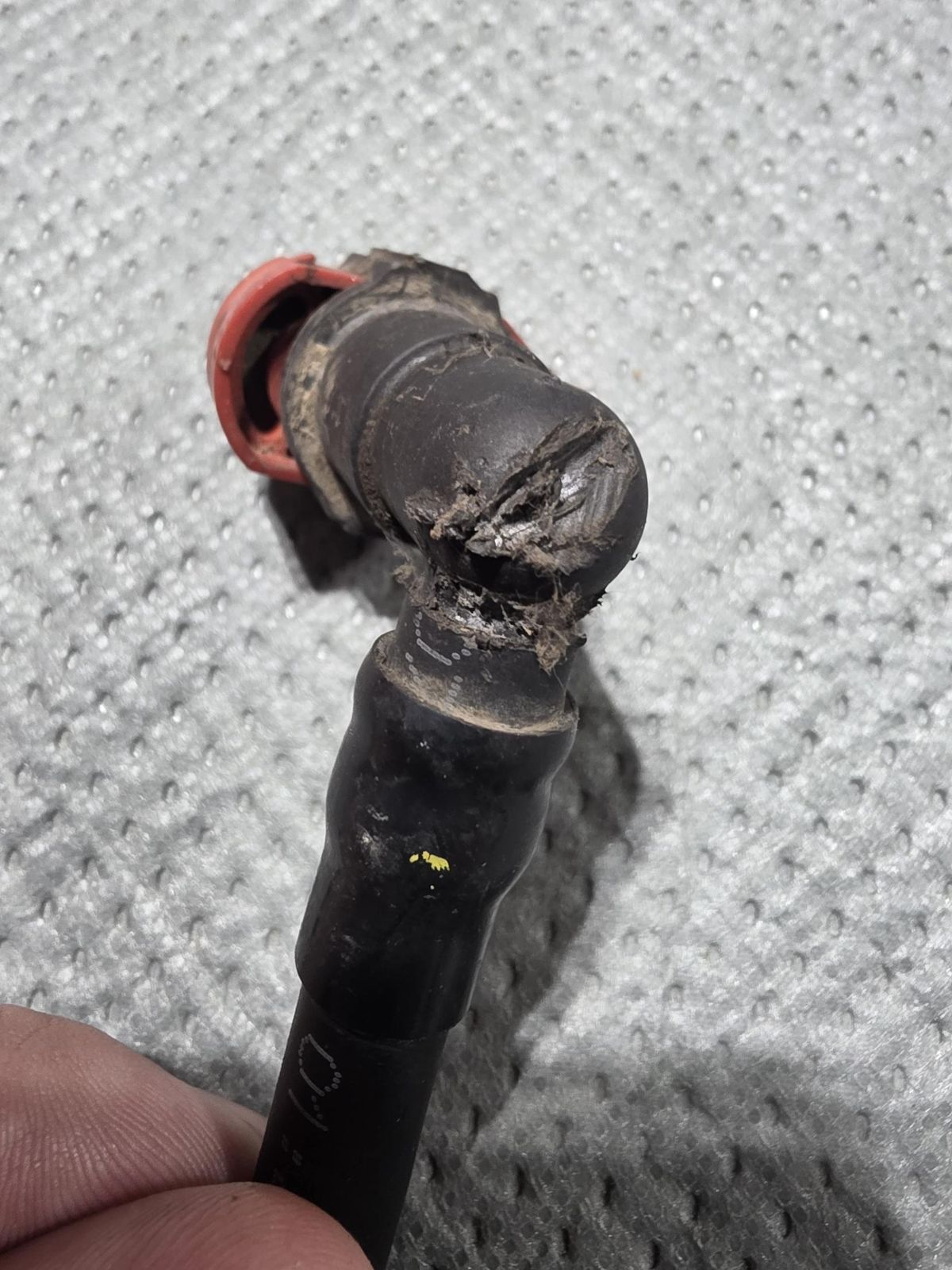
- What to know: A cracked hose, a split charcoal canister or a valve that isn't sealing lets vapor out. Usually sets a check engine light.
- Charcoal canister soaked with fuel
- Where you smell it: Near the rear, strongest after a fill-up.
- What to know: Topping off after the pump clicks off can push liquid fuel into the canister.
- Filler neck
- Where you smell it: Near the fuel door or the rear wheel, mostly while fueling or with a full tank.
- What to know: The pipe to the tank rusts through, or its hose cracks.
- Fuel line or hose
- Where you smell it: Under the car or under the hood.
- What to know: A liquid fuel leak. Lines run from the tank to the engine, and they rust, crack or loosen at a fitting.
- Fuel injector or its seal
- Where you smell it: Under the hood.
- What to know: Fuel seeps where an injector seals to the engine. A fire risk, because it is close to hot parts.
- Seal on top of the fuel tank
- Where you smell it: Near the rear, strongest with a full tank.
- What to know: The fuel pump mounts through the top of the tank, and its seal can leak when the tank is full.
A sharp exhaust smell is a different thing. That is an engine burning too much fuel or an exhaust leak, and exhaust getting into the cabin is its own reason to have the car checked right away.
What you can check yourself
Do these outside with the engine off. No flame, no smoking, and never use a lighter to look.
- Find where it is strongest. Fuel door, rear of the car, under the hood or inside. That alone narrows it down a lot.
- Look underneath. Check the ground where the car was parked for wet spots or stains. Gasoline evaporates fast, so a stain can be all that's left.
- Check the gas cap. Tight until it clicks, with a seal that isn't cracked.
- Note when it happens. After a fill-up, on a cold start, in the heat, or all the time.
- Check the dash. A check engine light along with the smell points toward the EVAP system.
If you find liquid fuel, stop there. Don't start the car, and don't park it in a garage.
How the leak gets found
- Look first. Fuel lines, the fuel rail and injectors, the filler neck and the tank are checked for wet spots, stains and cracked hoses.
- Smoke test the vapor system. A machine fills the EVAP system with a visible vapor at very low pressure. Smoke comes out where the leak is.
- Check fuel pressure. A fuel system that loses pressure quickly with the engine off points to a leak or a part that isn't sealing.
- Read the scan data. Codes and fuel readings show whether the engine is running rich.
Then you get a written estimate that names what is leaking, before any repair starts.
Getting it fixed
- Find the cause first. The right part gets replaced, not a guess.
- Written estimate first. You see what failed before any work starts.
- Your choice of part. Options are ranked by quality and warranty term, from the best aftermarket and OEM parts.
- Where: where the car is parked, in Lake Norman, Mooresville, Denver, Lincolnton and Statesville. Like every repair we list, not every car can be done in a driveway. If we quoted your repair and can't reach the part when we arrive, you don't pay for the repair.
Get a quote for a fuel smell diagnosis
Updated November 28, 2026.