The short answer
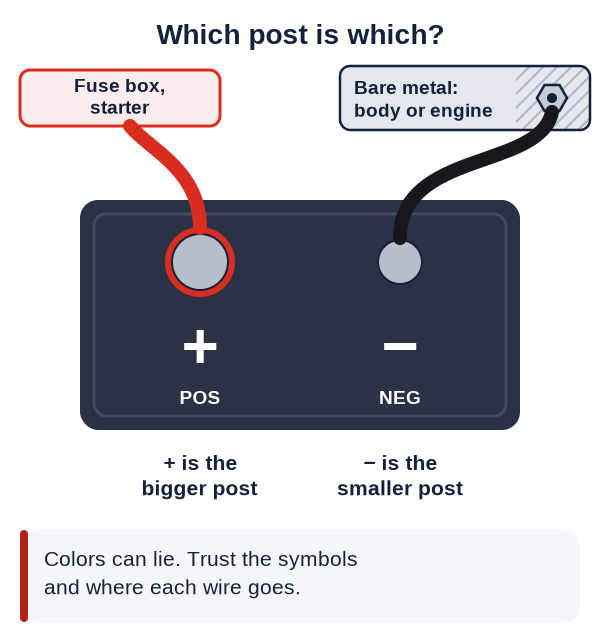
Look for the + and − molded into the case. If you can't read them, follow the wires: the negative cable ends on bare metal, the car's body or engine. The positive cable goes to the fuse box and the starter.
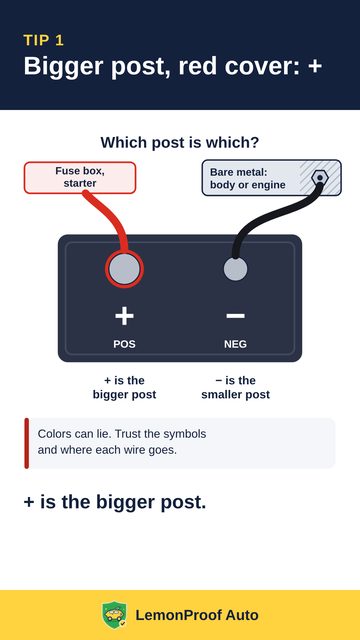 Watch it in under a minuteOur short video on YouTube
Five ways to tell
- The symbols. + or POS, − or NEG, molded into the case or the cover.
- The post size. On standard top-post batteries, the positive post is a little bigger around.
- The cover. The positive usually has a red cap. Helpful, but don't trust color alone: a replacement cable can be any color.
- Follow the negative wire. It bolts to bare metal: the body, the frame or the engine.
- Follow the positive wire. It goes to a fuse box, a fusible link or the starter.
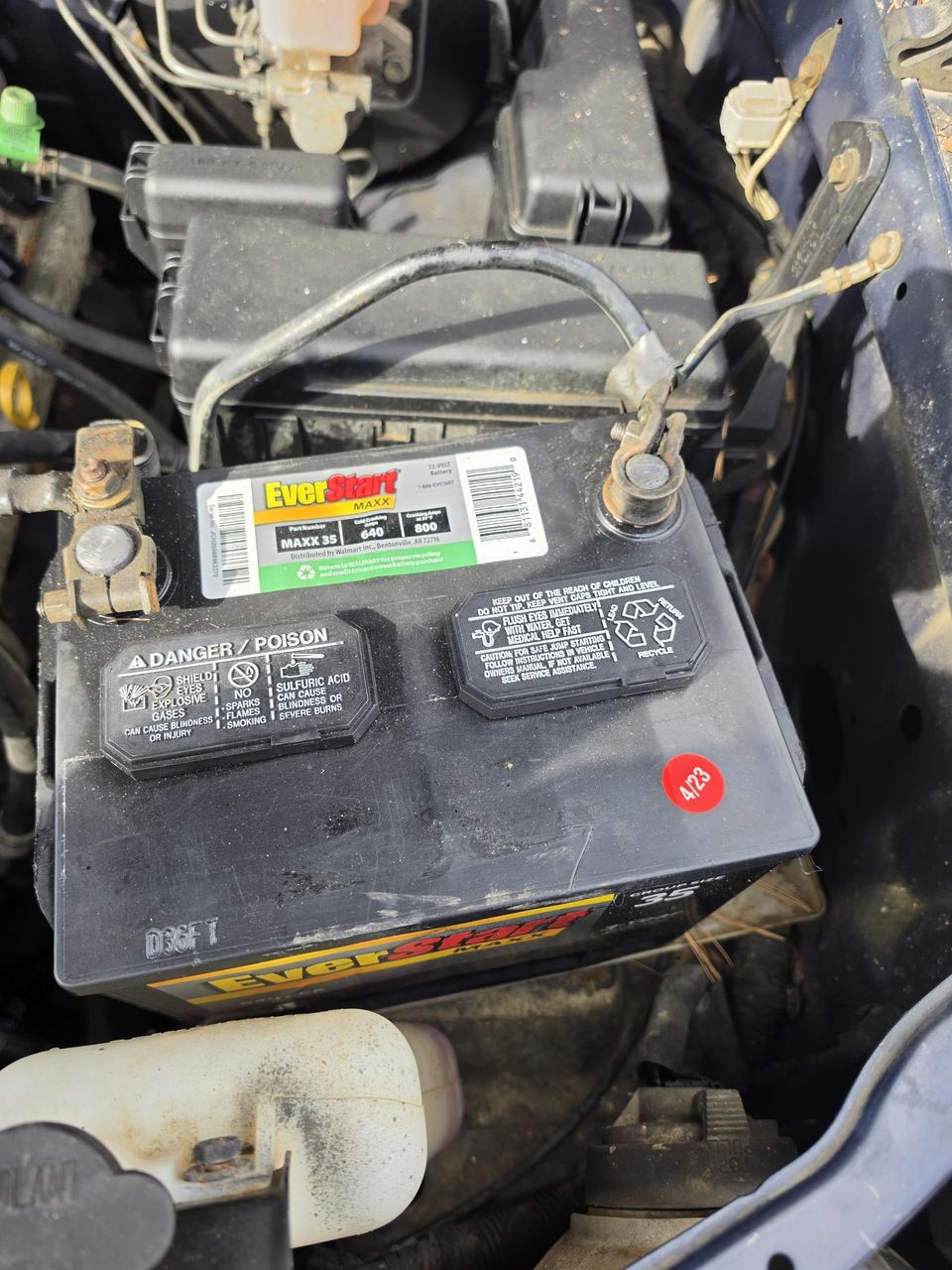
Side-post batteries, common on GM cars, use bolts instead of posts, and both are the same size. Go by the symbols and the wires.
Battery in the trunk or under a seat
Many luxury cars put the battery in the trunk or under a seat, with jump points under the hood marked + and −. Use those. They can be hard to spot, so check the owner's manual for where they are.
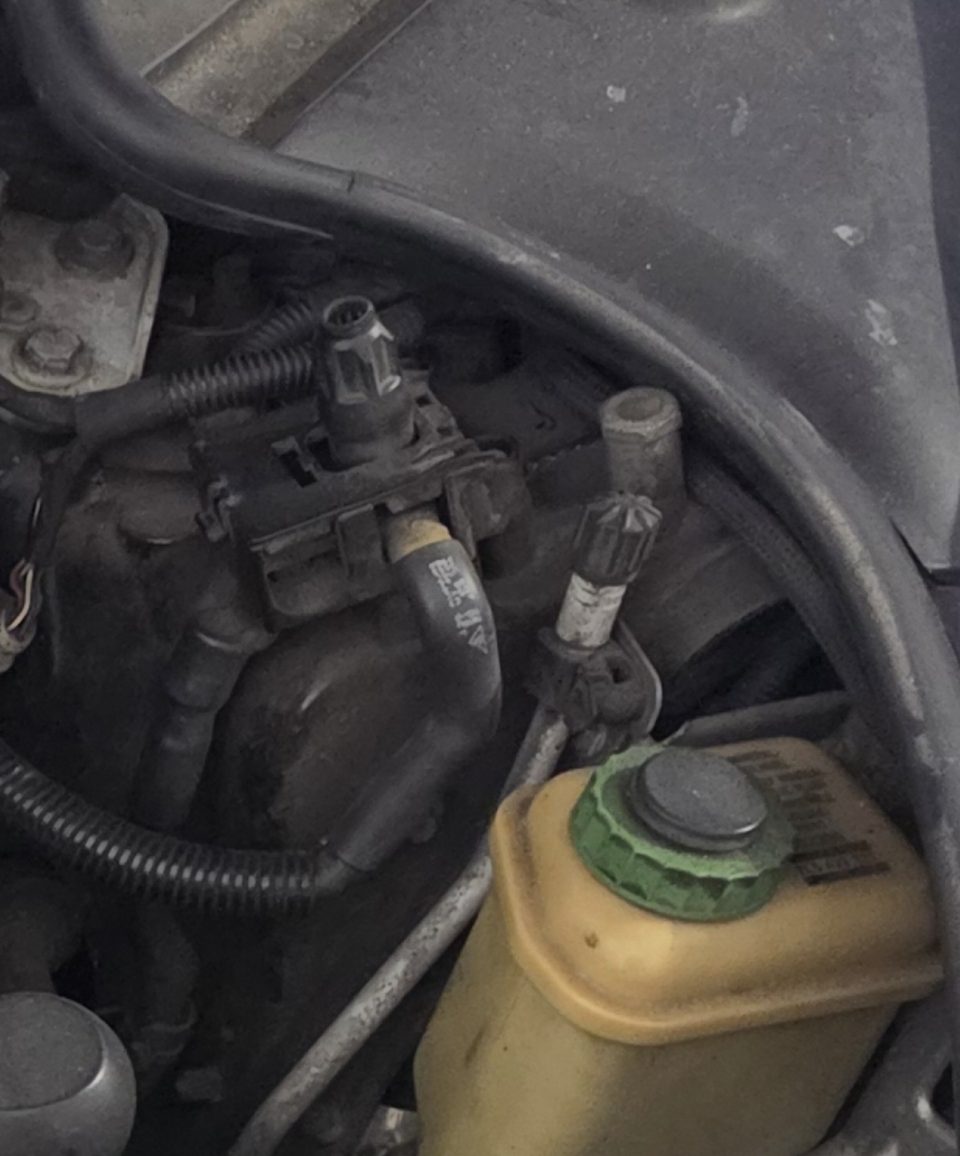
Careful: an AC port can look like a jump post. If a cap comes off and there's a little valve under it, like the one on a tire, that's the AC. Put the cap back, and don't clamp a cable or a jump box to it.
Why it matters
Hooking a battery up backwards, even for a second, can blow fuses and damage the car's computers, the alternator or a charger.
Take the negative off first and put it on last. Then a wrench that touches metal while you're working on the positive can't short the battery.
Get a quote for a battery test
Updated November 27, 2026.