The short answer
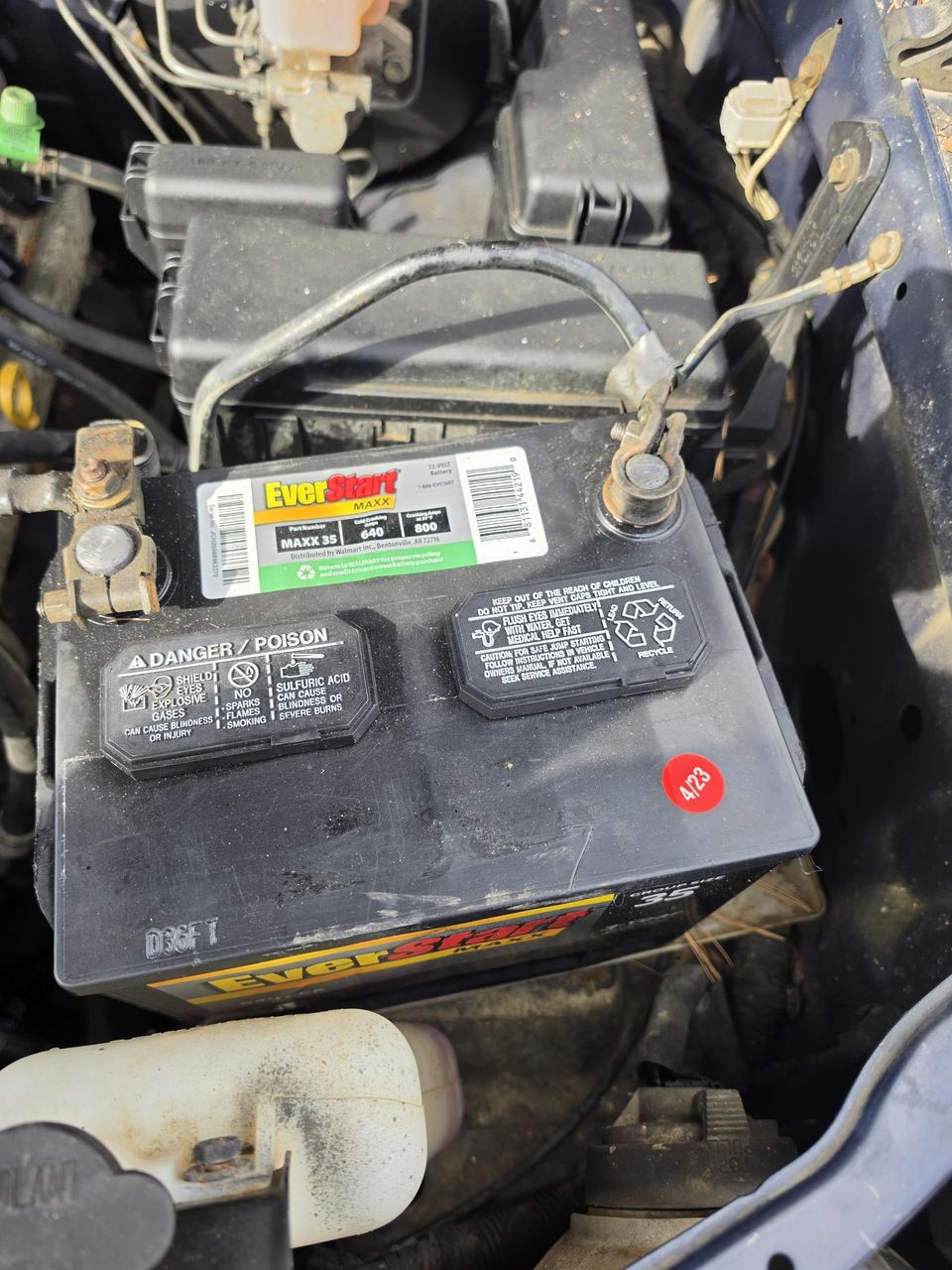
A car battery starts the engine and powers the car's computers when the engine is off. Most last somewhere around three to five years. Heat shortens that, so Charlotte summers wear batteries out faster than winters do, even though winter is when they finally fail to start the car.
A dead battery, a bad alternator and a bad starter can all end the same way: a car that won't start. Testing all three together is how you avoid buying a battery you didn't need.
Signs your battery is going
- Slow, labored cranking, worst on a cold morning.
- Clicking and no crank, or dash lights that dim when you turn the key.
- Needing a jump more than once.
- A swollen case, a cracked case, or heavy corrosion on the terminals.
- Electrical oddities: a radio that resets, warning lights that flash on at startup, or a start-stop feature that quits working.
Things you can check at home
Two cheap tools answer a lot of questions before you pay anyone: a test light and a basic multimeter. Both are sold at any parts store.
Check a fuse with a test light.
- Find the fuse. The owner's manual and the fuse box lid show which fuse runs what.
- Turn the key on. Many fuses only have power with the key on.
- Clip the test light to bare metal on the body or the battery's negative post.
- Touch the tip to the two small metal test points on top of the fuse, one side, then the other. You don't have to pull the fuse.
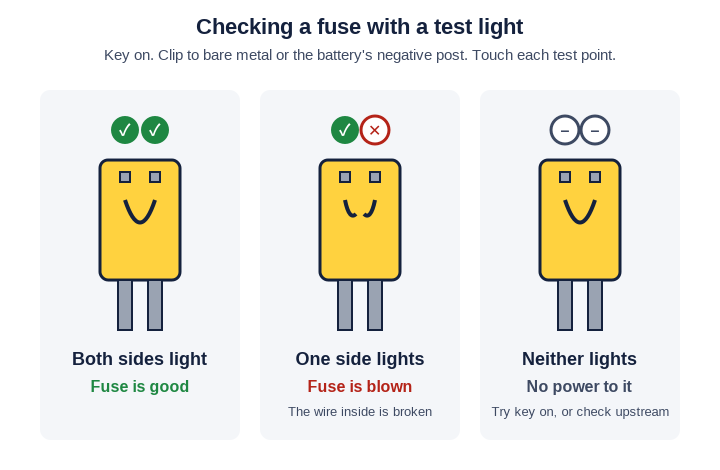
Use the test light on fuses only. Don't probe the car's wiring or computer connectors with it, and never the yellow airbag wiring. A test light draws enough current to damage some electronics.
Check the battery and charging with a multimeter.
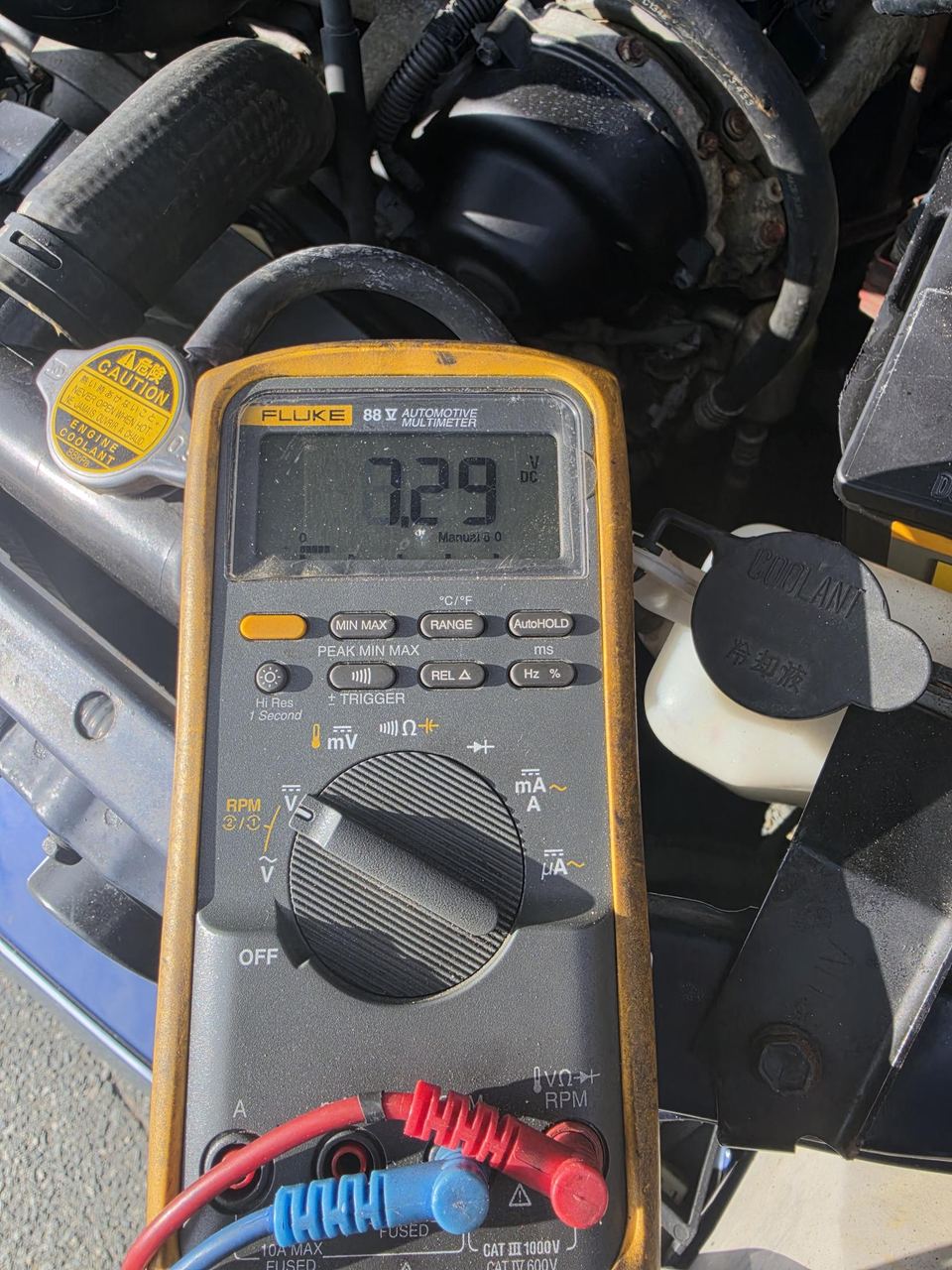
- Set the meter to DC volts. Red lead on the battery's positive post, black on negative.
- Engine off, after the car has sat an hour or more. A healthy, charged battery reads about 12.2 to 12.65 volts. Near 12.6 is full. Around 12.2 is about half charged. Below that, it's low.
- Engine idling. It should read about 13.5 to 14.5 volts. That's the alternator charging.
- Add a load. With the engine idling, turn on the headlights, the blower on high and the rear defrost. The reading should stay steady in that range. A big drop or a jump above about 15 volts points to a charging problem.
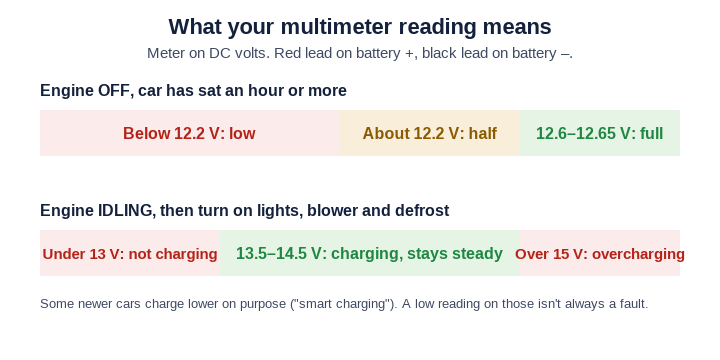
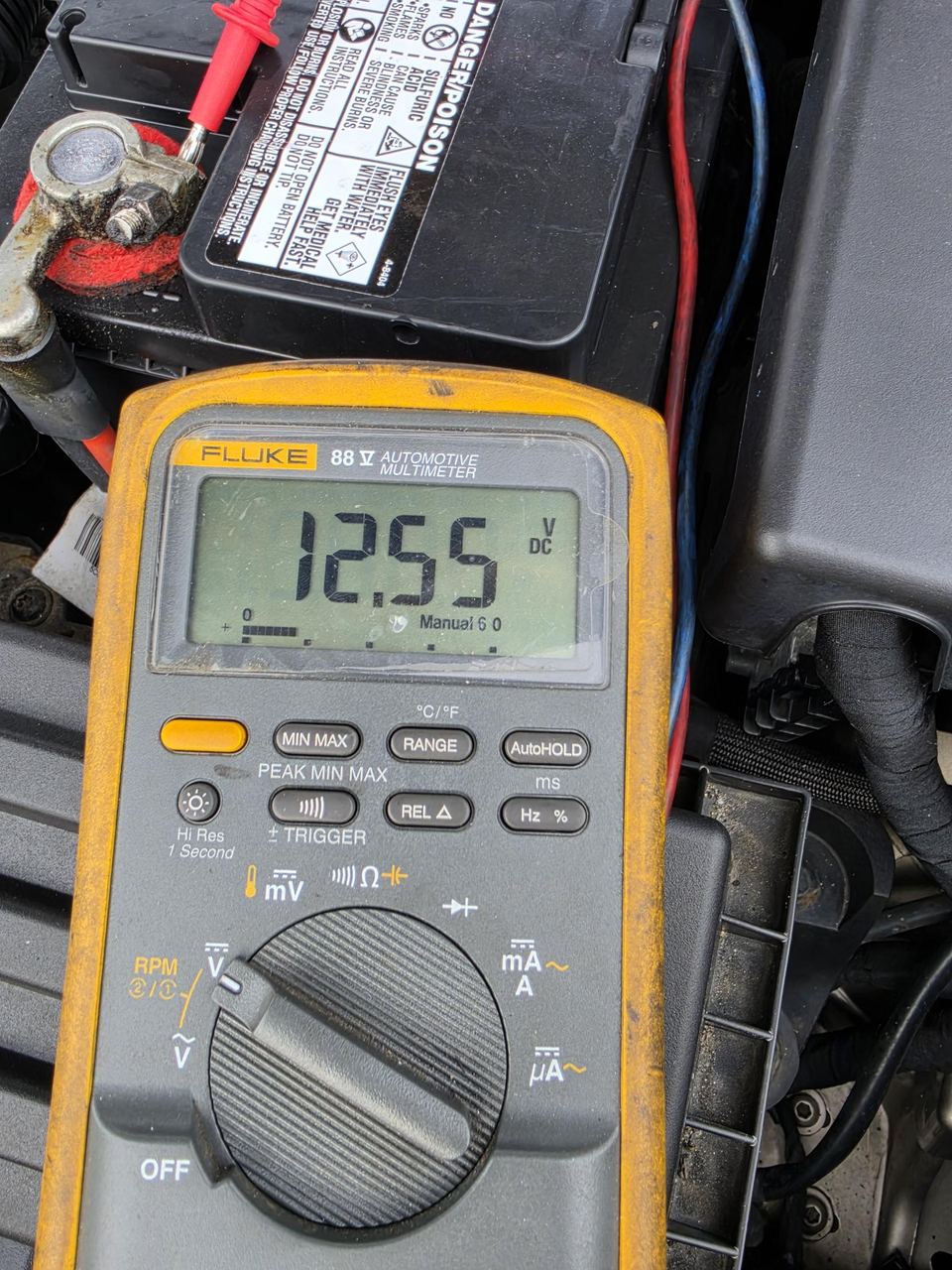
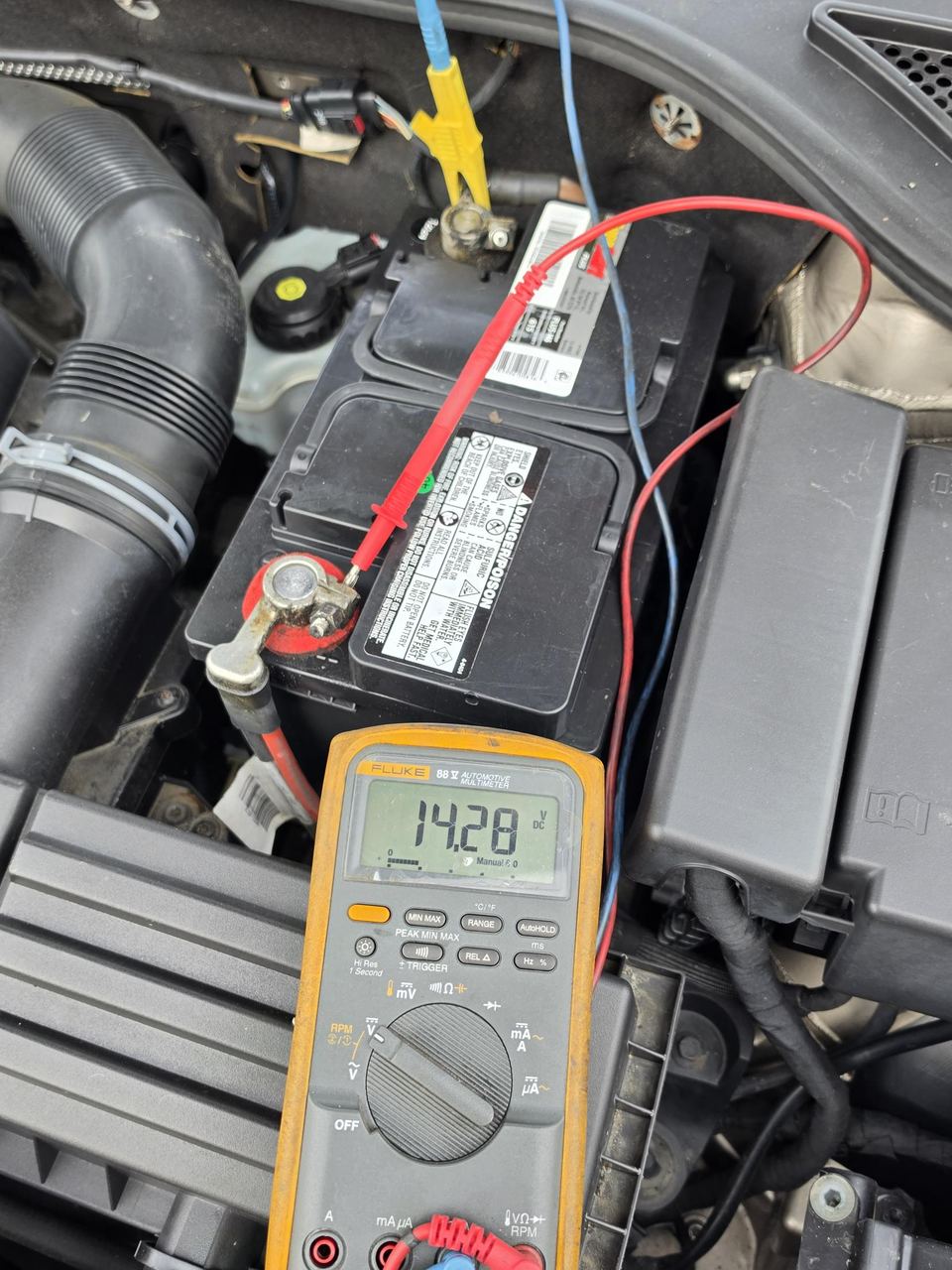
Some newer cars use smart charging and run lower on purpose, so one low reading isn't always a fault. And a battery can read fine on a meter and still fail under load. If your numbers look off, or look fine and the problem keeps happening, that's when to call us.
Keep hands, tools and loose clothing away from the fan and belts with the engine running.
Not sure which post is which? See which battery terminal is which. Battery dying overnight? Test for a parasitic draw.
How we test it
- Check the voltage at rest. A fully charged battery sits around 12.6 volts with the car off. Around 12.0 volts it's mostly discharged.
- Load test it. A tester checks whether it can still deliver the cranking power it's rated for. A battery can show good voltage and still fail this.
- Check the cables and grounds. A loose, corroded or broken cable can look exactly like a dead battery.
- Check the charging system with the engine running, so we know the alternator isn't the real problem.
- Check for a drain if the battery keeps dying overnight.
What newer cars need
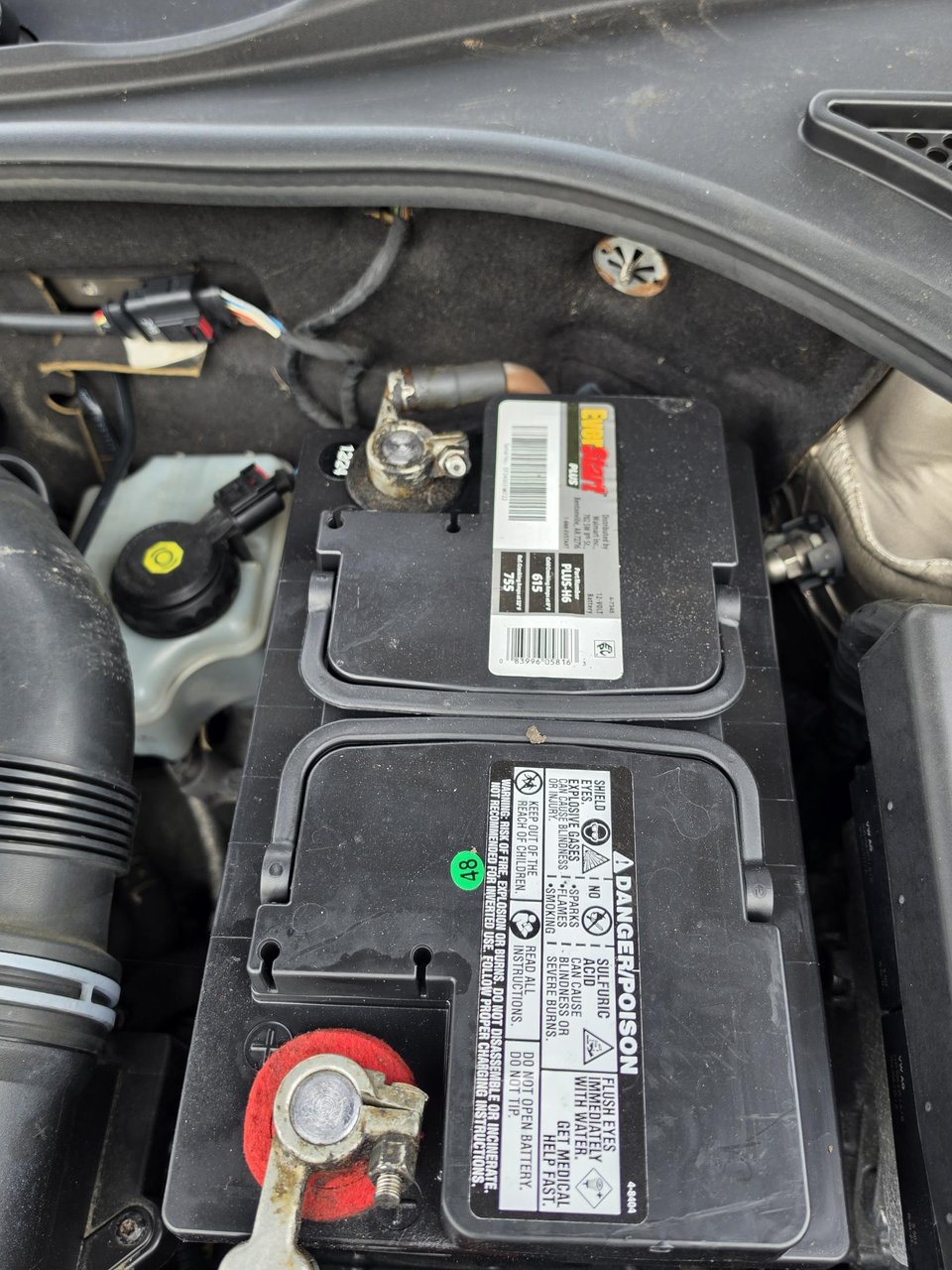
- The right type. Cars with start-stop usually need an AGM or EFB battery, not a standard one. The wrong type wears out fast.
- A slow charge. AGM batteries want to be charged slow and low. After one has run flat, use a plug-in charger with an AGM setting. Don't count on a jump and a drive to refill it.
- Registration. Many newer cars track battery age to manage charging. On those, the new battery has to be registered with a scan tool, or the car keeps charging it like the old one.
- Memory and relearns. Disconnecting the battery can reset windows, the radio and idle settings. Some cars need a relearn afterward.
This is the part a quick parts-store swap often skips.
What drives the cost
- The battery type. Standard, EFB or AGM. Cars with start-stop need the pricier AGM or EFB.
- Where the battery sits. Under the hood is quick. Under a seat, in the trunk or behind a wheel liner takes longer.
- Registration and relearns. Many newer cars need the new battery registered with a scan tool.
- What else turns up. A corroded cable, a bad ground or a charging problem found during testing.
That's why we don't post one price for every car. See how our estimates work. Our rates are on our Rates page, and every repair gets a written estimate before work starts.
Getting it fixed
- Find the cause first. The right part gets replaced, not a guess.
- Written estimate first. You see what failed before any work starts.
- Your choice of part. Options are ranked by quality and warranty term, from the best aftermarket and OEM parts.
- Where: where the car is parked, in Lake Norman, Mooresville, Denver, Lincolnton and Statesville. Like every repair we list, not every car can be done in a driveway. If we quoted your repair and can't reach the part when we arrive, you don't pay for the repair.
Get a quote for a battery test or replacement
Updated November 28, 2026.